
Lee County Busted Mugshots
One arrest in Lee County leaves paper in more than one office. The stop may come from the Lee County Sheriff's Office or the Bishopville Police Department. That office writes the incident report. Custody is a different story. Detainees go to the Sumter-Lee Regional Detention Center, which the Sumter Sheriff's Office runs, not to a county jail in Bishopville. So the arresting agency and the holding facility are often not the same. The mugshot and the booking report are two distinct things as well. One is an identification photo taken at intake. The other is the paperwork built around the custody period itself.
That split explains why a search sometimes comes up empty. Present custody, the arrest report, and any later court case can each sit with a different custodian. Another mix-up involves Lee Correctional Institution. That is an SCDC state prison in Bishopville with no tie to county booking. For how a case was resolved, look to the court record.
Lee County busted mugshots can be checked through official booking channels. Photos and charges listed there reflect arrest activity only.
Lee County Booking Record Fields
South Carolina's county retention schedule describes the booking-report series with more reliability than any portal layout. One report can tie together identity details, the arresting agency, booking data, charges, and release information. It may also hold personal or investigative material that never gets released routinely. Finding someone on a regional inquiry page does not mean every field is visible online or free of redaction.
| Record area | What the series may contain |
|---|---|
| Identity and location | Name, aliases, descriptive data, agency or case identifier, facility, and booking or release times. |
| Arrest processing | Arresting agency or officer, booked charges, booking officer, and docket or case reference. |
| Administrative information | Contact, driver-license, next-of-kin, medical, and NCIC-related data, which may be withheld or redacted. |
| Photo material | A mug-shot series and related identifiers, with no verified Lee or regional online-photo policy. |
A few terms keep getting confused. Booking is the intake process that follows an arrest. Bond is a condition a court sets that can allow release. The disposition is the result a court reaches later. Keeping those straight stops a current-custody entry from being mistaken for a final outcome.
- Booking
- Intake and record creation after an arrest.
- Arraignment
- A court appearance where a charge is formally addressed.
- Expungement
- A statutory process that can limit or remove eligible records after the required court process.
Request Lee County Booking Records
Go straight to the office that holds the item. LCSO incident reports sit with LCSO Records and Warrants. Anything Bishopville created belongs with the BPD. Questions about regional intake, present custody, release material, or a facility-held photo go to the Sumter-operated detention center. A narrow, targeted request lets staff find what you need without treating a whole file as automatically releasable.
- Identify the arresting agency and whether the request concerns an incident report, booking report, custody or release record, or a releasable photo.
- Provide the person's name and known alias, an approximate date, and any case, incident, docket, or booking number.
- Send an LCSO request to Records/Warrants, P.O. Box 89, Bishopville, SC 29010, or call 803-484-5353. Direct regional detention questions to Sumter-Lee Regional Detention Center, 1250 Winkles Road, Sumter, SC 29153, 803-436-2340.
- Ask for a cost estimate when needed and preserve the agency's response, including any stated redaction or exemption basis.
Under the South Carolina FOIA, an agency has 10 business days to respond to a written request for records under 24 months old, and 20 business days for older ones. When records will be supplied, the outer production windows run 30 and 35 calendar days after that determination. The law allows charges for actual search, retrieval, and redaction work, plus a deposit in the circumstances it spells out. No fee sheet or special calendar exists for the Lee Sheriff, BPD, or SLRDC.
Note: A precise request gives the custodian a sound basis to locate a releasable record while protecting material the law requires it to withhold.
South Carolina Busted Record Law
Photographs fall inside South Carolina FOIA's public-record definition, but that does not entitle anyone to an unredacted booking packet or image. The same law makes certain confinement information from the prior three months available for inspection and copying, subject to exemptions. Limits tied to law enforcement, privacy, safety, sources, technique, active investigation, and fair proceedings still apply. For the related restrictions and publication rules on arrest records, the state arrest and booking statute is the controlling text.
Section 17-1-60 targets publishers that demand payment to remove or revise South Carolina arrest or booking information. It lays out a certified-mail process with certified documentation, a 30-day window for qualifying removals or revisions, and stated exceptions. It does not bind government agencies, decide expungement eligibility, or promise that every search result changes overnight. An attorney or the proper court process is the right venue for a real legal question.
Sealing or expungement eligibility turns on the offense, the court, and the final outcome. The official starting points are the Judicial Branch expungement process page and the Uniform Expungement Act. Where the statute requires it, arrest, booking, warrant, photo, and fingerprint material gets destroyed or held under seal. Juvenile identity and image records carry their own confidentiality protections. Retention is one thing and web availability is another: booking reports run 10 years, inmate records 10 years after release, mugshots until superseded or no longer needed, and jail books permanently.
For a Lee page published by a private site, fix the live source first. RecentlyBooked's published policy and Mugshots.com's record-maintenance policy both describe free correction routes for qualifying records, though each statement comes from the publisher itself rather than a guaranteed outcome or a substitute for court paperwork. Once the live page changes, Google's Refresh Outdated Content tool can clear stale search results. Be wary of anyone asking for payment to make a correction.
Lee County Busted Record Limits
Not everything tied to an arrest is public content. South Carolina's Children's Code shields juvenile law-enforcement identity and image information. In qualifying expungement situations, arrest, booking, warrant, photo, and fingerprint material is destroyed or sealed for limited purposes only. A stale entry on some private site does not weaken those protections.
Start by figuring out which office holds the item and what the court finally decided. A custodian can apply FOIA exemptions, redactions, sealing rules, or other limits to any particular request. No verified online-photo correction form exists for the Lee Sheriff, BPD, or SLRDC. There is no local web form to point to.
Lee County Record Cost Rules
No public price list for records came from the Lee Sheriff or Bishopville police. South Carolina law settles the method anyway. Agencies may charge the prorated salary of the lowest-paid employee qualified to do the work, and a deposit can be required in some cases. So ask the custodian who actually holds the record for an estimate. That beats guessing from another agency's fees.
State prison requests work differently. SCDC posts its own FOIA numbers: ten cents a page in black and white, twenty-five cents in color, and $18.95 an hour for search, retrieval, and redaction. A deposit may apply. Those prices fit SCDC alone. They are not a Lee County or SLRDC schedule.
Note: A fee estimate tells you the cost up front but never changes whether the custodian can release the material at all.
Lee County Booking Alerts
The sheriff's app is a messaging tool, plain and simple. It pushes announcements, takes anonymous tips, shares agency information, and links to official channels. One UCP-hosted alert shows how a chosen event looks in that app-linked format. Nothing here amounts to a full roster, a booking record search, a mugshot display, or a warrant list.
Two other systems fill narrower roles. South Carolina VINE names Sumter-Lee Regional Detention Center as its custody contact for notifications. Lee County CodeRED is a separate emergency-alert subscription. Both do exactly what they describe. Neither can replace a current-custody inquiry, confirm a court result, or catch every booking.
Find Lee County Busted Arrests
Skip the single catch-all name search. Work through custody states in order. For someone possibly still held, the official regional route comes first. Want the arrest report itself? Go to the originating agency. A court case file answers its own question, and the state-prison locator another. Lee's regional detention setup rewards this sequence. It also keeps one empty result from fooling you into thinking no arrest ever happened.
- Open the Sumter detention page and follow its official CentralSquare inquiry link for a designated Lee detainee.
- If an agency report is needed, contact LCSO Records/Warrants or BPD, depending on who initiated the arrest.
- For a filed case, use the Lee Public Index and verify identifiers and docket details.
- Use the SCDC locator only for someone who may have entered state-prison custody. Use the written request path when an official online result cannot answer the narrow record question.
Federal and immigration locators cover separate worlds. The BOP Inmate Locator shows no photos and is not a county roster. The ICE tool tracks only its own detainee system. Neither one tells you about regional custody in Lee or replaces a county court record.
Where Lee County Busted Records Appear
Start with official sources. Each one names a custody state or a records custodian, and that is exactly what you need. The regional portal counts as an official lead. Its result fields, photo display, update schedule, and post-release retention remain unverified. News coverage and private indexes can flag a reported event. They cannot confirm current custody or a final case outcome.
| Channel | Coverage and photo status | Use it for |
|---|---|---|
| SLRDC inquiry route | Official current-custody lead; fields and photos unverified. | Designated Lee detainees who may still be in regional custody. |
| LCSO or BPD records | Official agency record route; release depends on the custodian. | Incident, booking, or other targeted record requests. |
| Lee Public Index | Official court source; not a booking-photo channel. | Filed cases, docket events, and available disposition information. |
| SCDC inmate search | Official state-prison channel with photographs for its current sentenced population. | State-prison custody, not ordinary regional bookings. |
| LCSO app and alerts | Official announcements and tips; no verified roster or photo feed. | Selected agency notices and notification tools. |
| RecentlyBooked and Mugshots.com | Unofficial Lee sections; potentially incomplete or stale. | Secondary leads that must be checked against official records. |
For reported news, ABC Columbia's Lee news index is worth a look. Stories there may touch on LCSO, BPD, SCDC, Bishopville, or Lynchburg when an outlet covers something. Just remember it is news, not a jail roster. The separate Midlands gallery is not marked Lee-only either. Neither of the county's two documented private sections draws a reliable city-level line, so completeness is never guaranteed there.
Lee County Busted Roster Limits
Lee has no verified standalone LCSO roster. All official inquiry runs through the regional Sumter detention system. That matters locally. An LCSO or BPD arrest can land someone in Sumter-operated custody, while any later court case sits in an entirely separate system. The portal depends on JavaScript. Nothing confirms which fields it searches, what results show, or whether booking photos appear. Its refresh rate and how long a released person stays listed are both unknown too.
Start with the official detention-center page for the custody question. If the portal leaves you stuck, call the facility. Then try the right records custodian. Release, transfer, timing, name formatting, and interface quirks can all hide a result that exists.
The detention center's official page marks the regional Lee custody route.
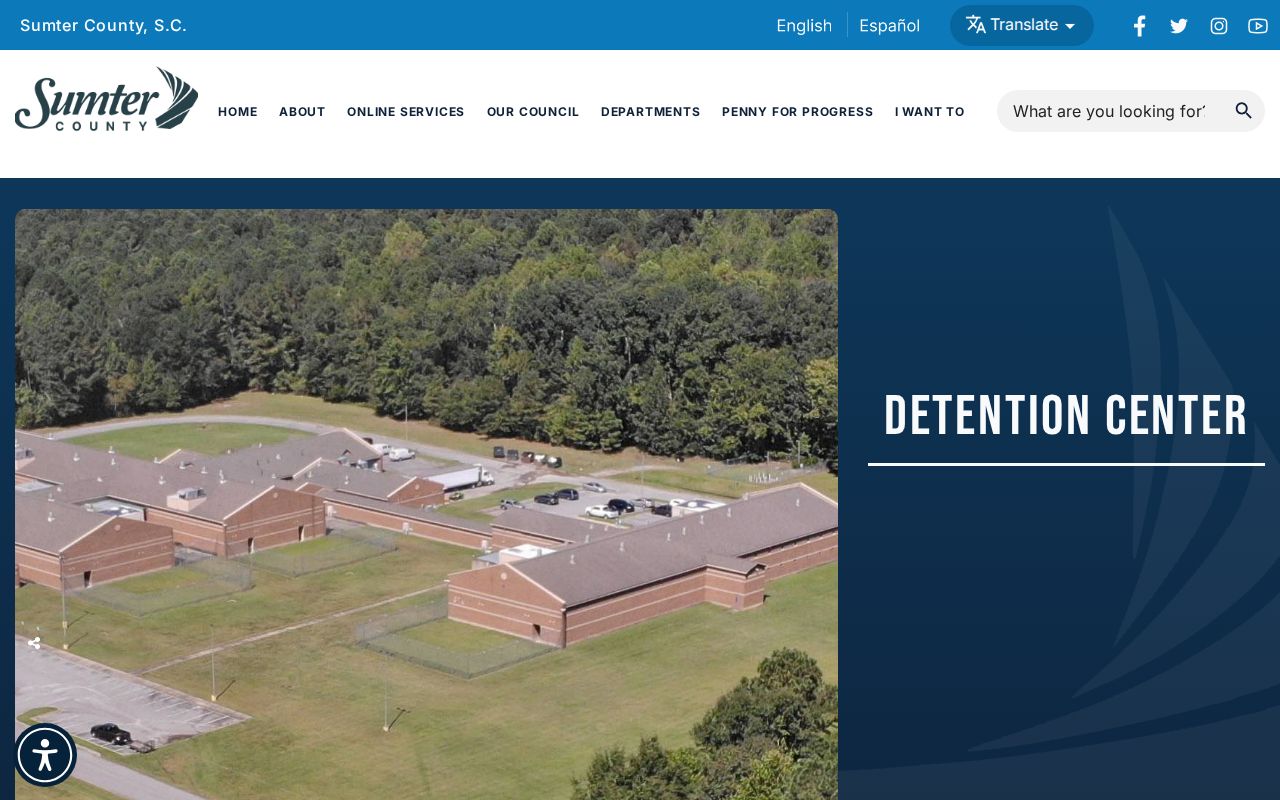
The facility page opens the door to custody inquiry. It does not verify a Lee-only historical roster or any public booking-photo display.
Recent Lee County Busted Bookings
No verified booking feed exists for Lee. Not from the sheriff, BPD, Lynchburg, or SLRDC. Nothing official defines a same-day, 48-hour, 72-hour, weekly, or chronological arrest log, and there is no confirmed field list, photo policy, update clock, or archive either. Treat the regional portal as a current-custody inquiry and leave it there.
LCSO's official Android app carries announcements, anonymous tips, agency information, and official-channel links. Its UCP alert example proves selected communications only. South Carolina VINE points to Sumter-Lee Regional Detention Center for notification support. Lee County CodeRED handles emergency alerts as a separate subscription. None of these gives complete booking photos or case outcomes.
Private sites tell their own stories. RecentlyBooked says its Lee section refreshes several times a day and keeps 30 days of entries. Mugshots.com has older date filtering that renders around 2011 through 2013. Those are private-site descriptions, not government schedules. Verify anything you find through the regional operator, the arresting office, or the court.
Note: A listing left on a private index may show a past booking, not current custody, an active charge, or a court outcome.
SCDC Photos After Lee Bookings
Photos of people serving state sentences live in one place. That place is the South Carolina Department of Corrections inmate search. Query by SCDC ID, SID, or first and last name. The tool even handles phonetic matching. Its reach stops at the prison system, though. Regional-jail bookings, released people, juveniles, community supervision, and fugitives all fall outside it. A blank result tells you nothing about a fresh Lee County arrest.
Bishopville's Lee Correctional Institution makes the line easy to blur. It is a state prison run by SCDC, not the local spot where arrests get booked. Anything the search does not hold goes through SCDC's separate FOIA process at its own posted fees. Those figures belong to SCDC alone, not the Lee Sheriff, BPD, or regional detention. SCDC's official search form stays within its state-prison population.
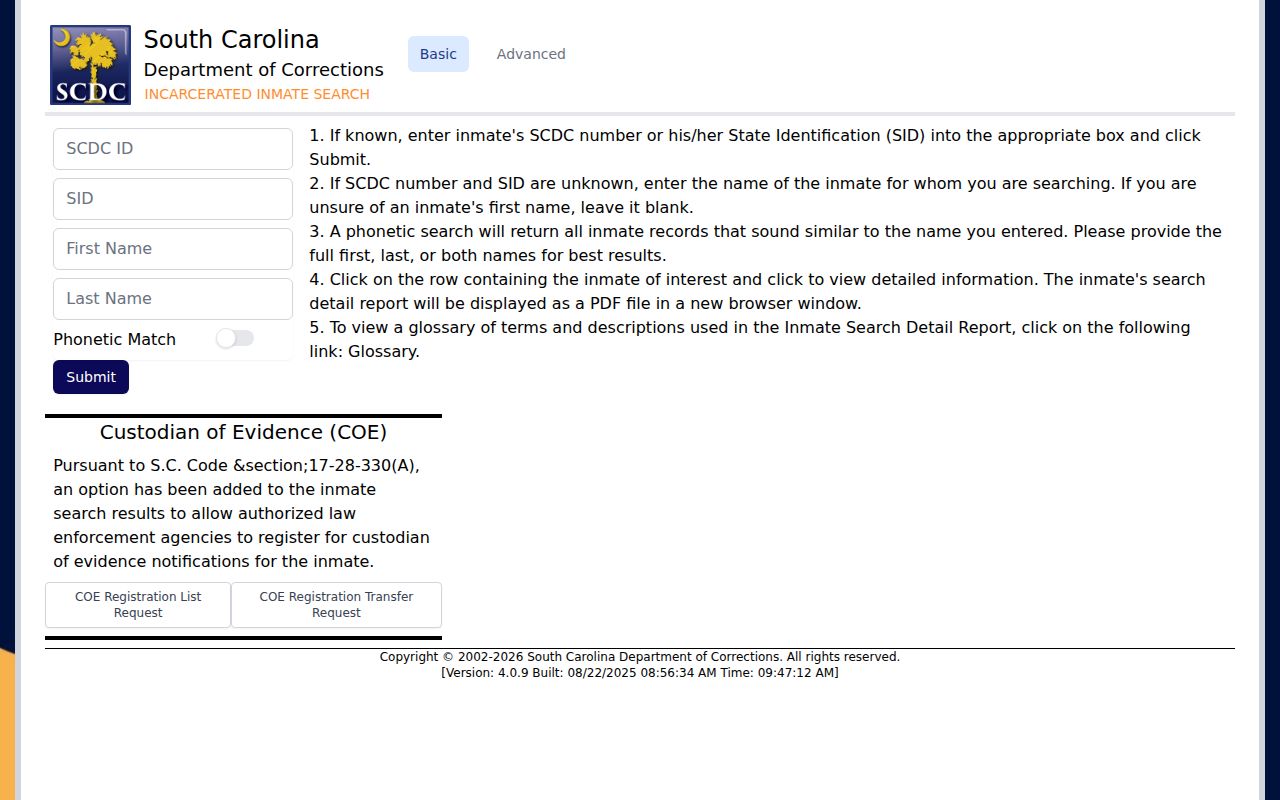
A hit on SCDC proves one thing. Someone entered the state prison system. That is all it proves. Do not relabel the result as a Lee County jail booking record, since the two systems track different stages of custody.
Lee County Custody Record States
One person's paper trail rarely sits in a single file. Who is in custody right now, the original arrest report, and the court case that follows each live with a different source. All of it started in Lee County, though. The table maps each custody status to the office that usually answers it.
| Record state | Best source | What it does not decide |
|---|---|---|
| Just booked or in regional custody | SLRDC inquiry route or facility contact. | Final court outcome or online photo availability. |
| Released or recently processed | Detention or agency records request. | Whether a past entry remains online. |
| Filed court case | Lee Public Index and court contacts. | Present custody. |
| State-prison custody | SCDC inmate search. | Routine county booking status. |
There is history under Lee's court arrangements. A 2001 Supreme Court order touched on Sumter placement and video appearances for certain Lee defendants, but that ruling is background now rather than working procedure. What governs today is the documented regional agreement. For live court business, the Lee Judicial Branch hub ties together the Clerk, Bond Court, Magistrate, Municipal Court, case index, and court rosters, and each of those pieces does its own job.
Lee County Court Record Paths
Timing matters here. A booking can surface before any public docket exists. A docket can linger after regional custody has ended. The Third Judicial Circuit Clerk, Bond Court, Magistrate, Bishopville Municipal Court, court rosters, and Public Index all connect to a case, yet none substitutes for another. Court-administration questions go to the Bond Court and Magistrate contacts. The Public Index is the stronger official route once a case has been filed and you want its later posture.
The split matters more in Lee than most counties. Routine designated custody sits in Sumter while court administration stays close to home. The old video-appearance order explains how that geography came about. Treat it as history, not rule. For a case number, a date, or the final disposition, ask the right court office directly.
Lee County Record History Paths
Federal and immigration databases each answer one narrow question. Neither belongs in a Lee booking search. The BOP locator tracks federal custody and release records. It shows no photos. ICE's locator covers its detainee population and demands details that fit its search rules. Neither one covers regional custody, an LCSO or BPD report, or a Lee court disposition. Formal federal records questions go through their own FOIA channels.
Older county research works differently. SCDAH's Lee County guide points to Sheriff jail books from 1917 through 1941. It also lists General Sessions criminal journals and magistrate criminal dockets. Those collections can open a historical record trail. Still, they are not a live feed, a booking-photo archive, or proof of present custody. A focused SCDAH request should name the collection, the person, a rough date, and the question. Recent records belong with the agency, detention operator, court, or SCDC custodian that holds them.
Busted Mugshots by Lee City
Two incorporated municipalities appear on the Lee County city map. Bishopville runs an active police department. No public arrest log or booking gallery for it has been verified. Lynchburg's listed department is inactive. That leaves the Sheriff and the regional-detention route as the supported path there. Both city pages carry the same custody-state distinctions to their own agencies and records.
- Bishopville Busted Mugshots: BPD-originated reports, regional detention custody, and local reported-news limits.
- Lynchburg Busted Mugshots: the inactive municipal-PD finding, LCSO records path, and regional custody route.
Digging for an old record? The South Carolina Department of Archives and History lists Lee Sheriff jail books from 1917 to 1941 alongside related historic court material. Treat those collections as research leads, not current custody evidence or photo archives. For anything recent, start with the actual custodian.